Share On:


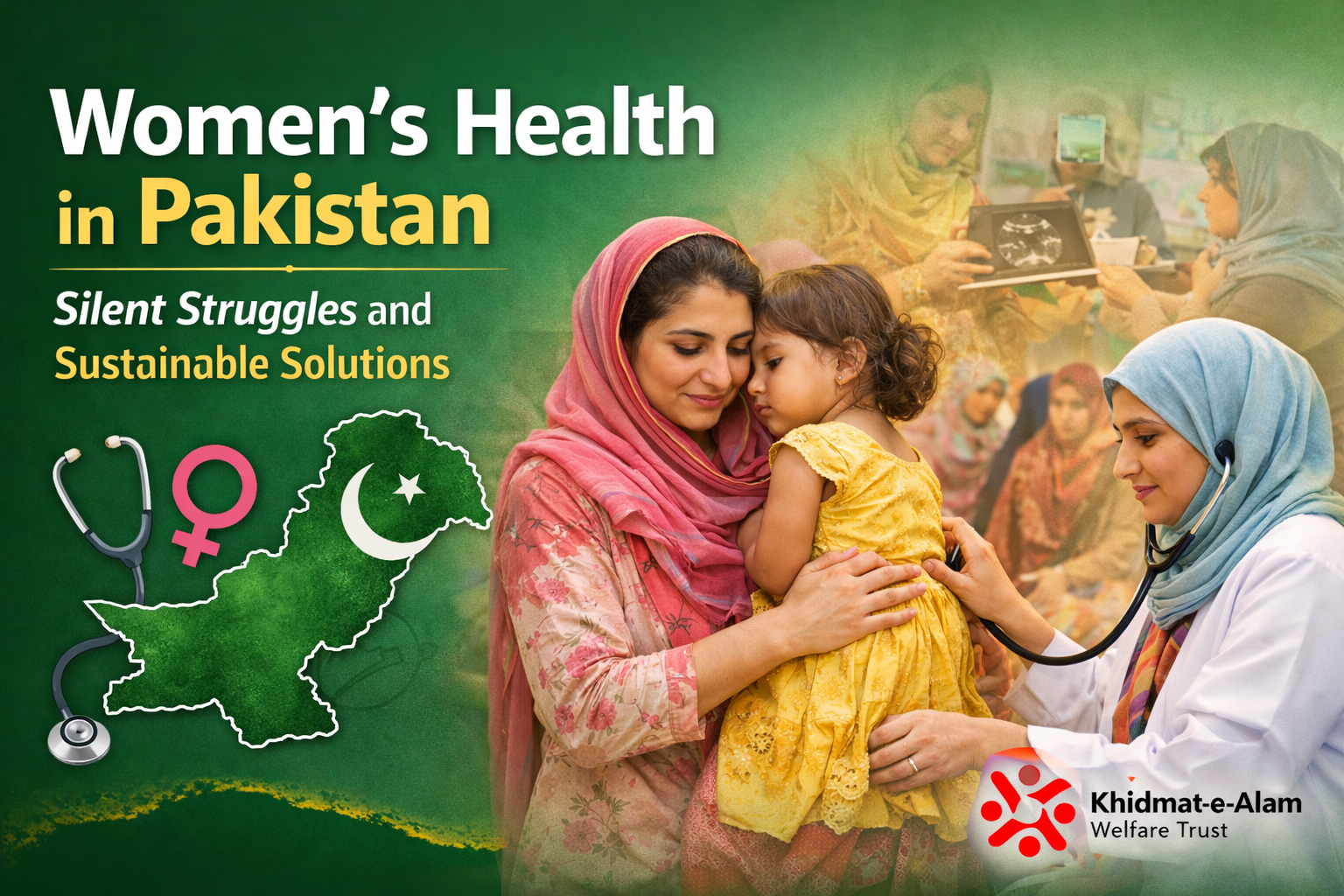
Women’s Health in Pakistan: Silent Struggles and Sustainable Solutions
Introduction
Women’s health in Pakistan remains one of the most overlooked yet critical public health challenges. Despite women forming nearly half of the population, access to quality healthcare services continues to be limited for millions, particularly those from low-income and marginalized communities. Social barriers, financial dependency, lack of awareness, and inadequate medical facilities often prevent women from receiving timely and appropriate treatment.
In many cases, women silently endure health issues such as malnutrition, anemia, reproductive health complications, and chronic illnesses without medical attention. These silent struggles not only affect women themselves but also have long-term consequences for families, children, and society as a whole.
Improving women healthcare in Pakistan requires sustainable, community-driven solutions. Healthcare NGOs in Pakistan, including Khidmat-e-Alam Welfare Trust, play a vital role in bridging this gap by providing free and affordable medical services, raising awareness, and supporting women with dignity and compassion.
The Current State of Women’s Health in Pakistan
Women in Pakistan face multiple healthcare challenges throughout their lives. Maternal health issues in Pakistan remain a major concern, with many women lacking access to proper antenatal and postnatal care. Malnutrition and iron deficiency anemia are widespread, especially among women of reproductive age, directly affecting maternal and child health outcomes.
Access to healthcare for women is further limited by geographical disparities. Urban women may have relatively better facilities, while women in low-income urban areas and rural regions struggle with limited medical infrastructure, shortage of female doctors, and transportation barriers. Preventable diseases often go undiagnosed due to lack of screening, leading to severe complications later in life.
Silent Struggles Faced by Women
Cultural and Social Barriers
Cultural norms and gender inequality significantly impact women’s health in Pakistan. In many households, women’s health needs are not prioritized, and seeking medical care often requires permission or support from male family members. Health-related discussions, particularly around reproductive health, are considered taboo, discouraging women from seeking help.
Financial Constraints and Poverty
Poverty is a major barrier to women healthcare in Pakistan. Many women depend financially on male earners and cannot afford medical consultations, diagnostic tests, or medicines. The rising cost of healthcare forces families to delay or completely avoid treatment for women, especially when resources are limited.
Reproductive and Maternal Health Challenges
Reproductive health in Pakistan continues to face serious challenges, including limited access to family planning services, inadequate maternal care, and lack of awareness about women’s health rights. Mental health issues related to pregnancy, childbirth, and social pressure often remain unaddressed, increasing long-term health risks.
Impact of Poor Women’s Health on Families and Society
The health of women directly influences the well-being of families and communities. Poor maternal health increases the risk of infant mortality, malnutrition, and developmental issues in children. When women are unwell, household stability and economic productivity suffer, creating a cycle of poverty and poor health.
Investing in women’s health in Pakistan is not only a healthcare necessity but also a social and economic priority. Healthy women contribute to healthier families, stronger communities, and sustainable national development.
Sustainable Solutions for Improving Women’s Health in Pakistan
Community-Based Healthcare Initiatives
Community-level healthcare programs help bring medical services closer to women who cannot access hospitals. Mobile clinics, local health camps, and awareness sessions enable early diagnosis and preventive care, especially for underserved populations.
Free and Affordable Medical Services
Free medical services for women are essential to address healthcare challenges caused by poverty. Charity medical centers and healthcare NGOs in Pakistan provide consultations, medicines, and diagnostics, ensuring women receive timely treatment without financial burden.
Education and Preventive Healthcare
Health education plays a crucial role in empowering women. Awareness programs focusing on nutrition, hygiene, maternal care, and disease prevention help women make informed health decisions and seek medical assistance early.
Role of Healthcare NGOs in Supporting Women
Healthcare NGOs in Pakistan act as a bridge between vulnerable communities and essential medical services. These organizations address gaps in the public healthcare system by offering free medical treatment, community outreach, and sustainable health programs tailored to women’s needs.
Through donor support and volunteer engagement, NGOs ensure that healthcare services reach women who would otherwise remain neglected.
How Khidmat-e-Alam Welfare Trust Is Making a Difference
Khidmat-e-Alam Welfare Trust is committed to improving women healthcare in Pakistan through compassionate and accessible medical services. The organization provides free OPD consultations, essential medicines, and diagnostic support to women from underprivileged backgrounds.
With a focus on maternal and general healthcare, Khidmat-e-Alam ensures that women receive respectful treatment in a safe and supportive environment. By addressing both medical and social barriers, the Trust continues to create meaningful impact in the lives of women and their families.
How You Can Support Women’s Healthcare
Sustainable change in women’s health requires collective effort. You can contribute by donating to support free medical services for women, volunteering your time and skills, or partnering through corporate social responsibility initiatives.
Your support helps ensure that no woman is denied healthcare due to poverty or social barriers.
Donate Us : +92-21-111-111-528
info@khidmat-e-alam.org
Conclusion
Women’s health in Pakistan faces silent struggles rooted in poverty, inequality, and limited access to healthcare. Addressing these challenges requires long-term, sustainable solutions driven by compassion, awareness, and community support. Healthcare NGOs like Khidmat-e-Alam Welfare Trust play a crucial role in delivering free medical services and empowering women to lead healthier lives.
By supporting women’s healthcare initiatives, we invest in stronger families, healthier communities, and a more resilient future for Pakistan.