


Share On:


Is Ramadan weight loss healthy or harmful? Learn medically backed facts, risks, and healthy fasting tips for Pakistan. Expert advice from Khidmat-e-Alam Medical Center.
Ramadan Weight Loss: Healthy or Harmful? (Medical Guide for Pakistan)
Ramadan is a sacred month observed by millions across Pakistan. Along with spiritual purification, many people experience noticeable weight loss during Ramadan.
But the real question is:
👉 Is Ramadan weight loss healthy or harmful?
At Khidmat-e-Alam Medical Center, Karachi, we often receive this question from patients during OPD visits, especially individuals with diabetes, blood pressure, and gastric issues.
Let’s explore the medical facts.
Why Do People Lose Weight During Ramadan?
During fasting, the body undergoes metabolic changes.
According to research published in the Journal of Nutrition and Metabolism (2019), intermittent fasting – including Ramadan-style fasting – can lead to:
- Reduced calorie intake
- Improved insulin sensitivity
- Fat metabolism activation
- Temporary weight reduction
When you fast for 12 –16 hours (common in Pakistan), the body:
- Uses stored glycogen first
- Then shifts to burning fat for energy
This process is called metabolic switching.
However, weight loss is not guaranteed. Many Pakistanis actually gain weight due to:
- Fried samosas & pakoras at iftar
- Sugary drinks (Rooh Afza, sodas)
- Heavy desserts (jalebi, kheer)
- Large portion sizes
Is Ramadan Weight Loss Healthy? (Medical Perspective)
✅ It Is Healthy When:
- Weight loss is gradual (0.5–1 kg per week)
- Balanced meals are consumed
- Hydration is adequate
- Protein intake is sufficient
Scientific Evidence
- A 2020 meta-analysis in BMJ Open found that Ramadan fasting can lead to short-term weight loss and improved lipid profile.
- Research in Frontiers in Nutrition (2022) showed improvements in blood sugar control in healthy adults.
- WHO states that controlled fasting can improve metabolic markers when done safely.
When practiced correctly, Ramadan fasting may:
- Reduce abdominal fat
- Improve cholesterol levels
- Enhance insulin sensitivity
- Support digestive health
When Ramadan Weight Loss Becomes Harmful
In Pakistan, we commonly see patients with complications due to:
- Severe dehydration (especially in Karachi heat)
- Skipping suhoor
- Excess caffeine consumption
- Diabetics fasting without medical supervision
Warning Signs
- Persistent dizziness
- Extreme fatigue
- Low blood pressure
- Hypoglycemia (low sugar)
- Severe headaches
If these occur, consult a physician immediately.
Ramadan & Diabetes in Pakistan
Pakistan ranks among the top countries for diabetes prevalence (IDF Diabetes Atlas).
A study in Diabetes Research and Clinical Practice reports that fasting without proper monitoring increases risk of:
- Hypoglycemia
- Hyperglycemia
- Dehydration
Patients with diabetes should consult their doctor before fasting.
👉 https://www.khidmat-e-alam.org/our-doctors/
Diabetes OPD Services – Khidmat-e-Alam Medical Center
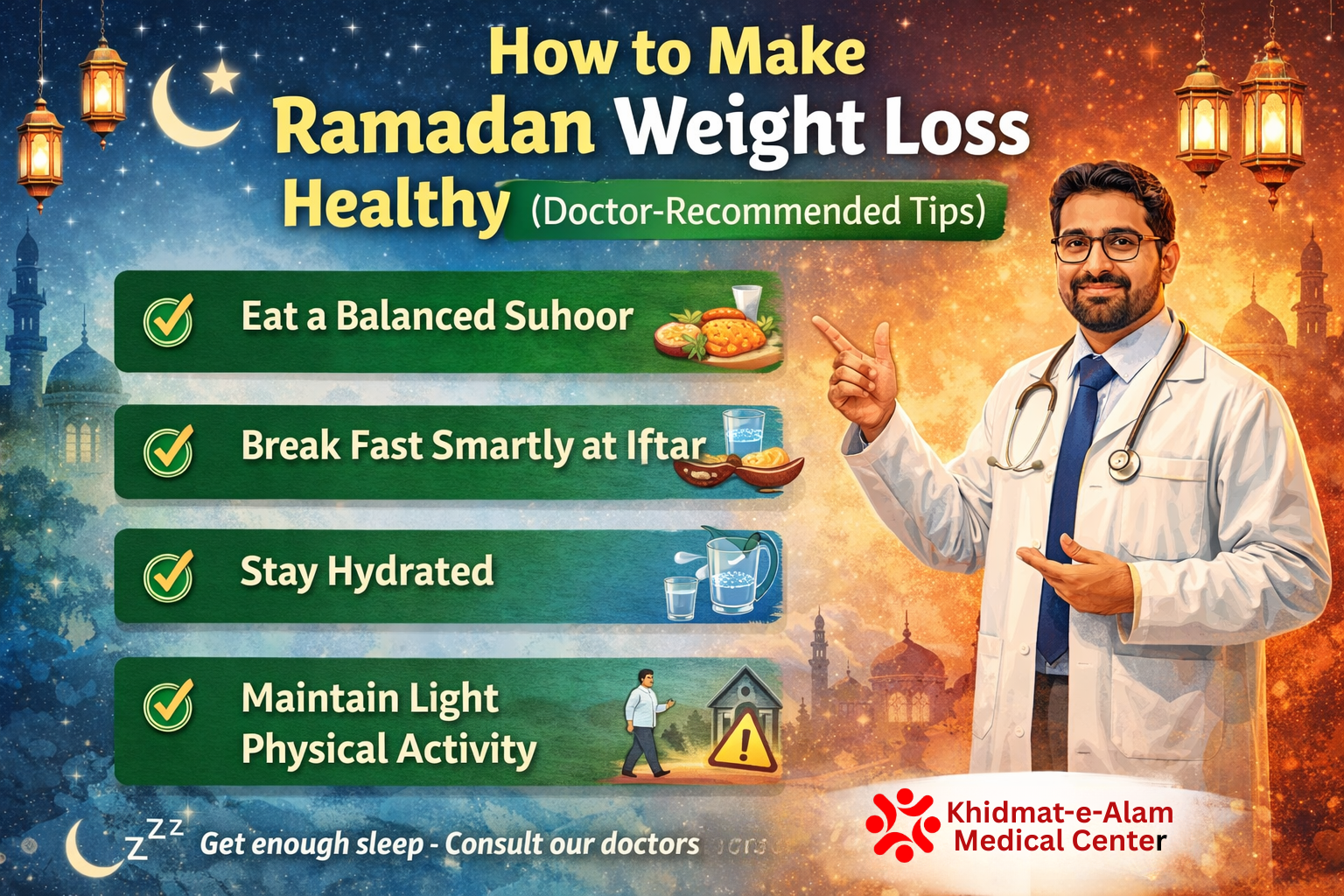
How to Make Ramadan Weight Loss Healthy (Doctor-Recommended Tips)
1️: Balanced Suhoor (Pre-Dawn Meal)
Include:
- Oats or whole wheat roti
- Eggs or yogurt
- Lentils (daal)
- Nuts & seeds
- Fruits (banana, apple)
Avoid:
- Very salty achar
- Fried parathas daily
- Sugary tea
2️: Smart Iftar Choices
Start with:
- 1–2 dates
- Water
- Fruit or soup
Wait 10–15 minutes before eating your main meal.
Keep your plate balanced:
- ½ vegetables
- ¼ protein
- ¼ whole grains
Avoid:
- Excess fried snacks
- Large sugary drinks
- Overeating immediately
In Pakistan, portion control is key.
3️: Hydration Strategy for Karachi & Hot Cities
The Pakistan climate increases dehydration risk.
Doctors recommend:
- 8–10 glasses of water between iftar & suhoor
- Coconut water occasionally
- Avoid excess chai/coffee
WHO emphasizes adequate hydration during prolonged fasting in warm climates.
4️: Maintain Light Physical Activity
- 20–30 minute walk after iftar
- Taraweeh prayer (natural moderate activity)
- Light stretching
Avoid intense gym workouts while fasting.
Get Enough Sleep
- Poor sleep increases hunger hormones and slows fat loss.
Try to:
- Take short naps
- Sleep 6–8 hours total (combined)
Does Ramadan Cause Muscle Loss?
If protein intake is low, muscle loss can occur.
A study published in Nutrients Journal (2021) shows that adequate protein prevents muscle breakdown during intermittent fasting.
To prevent muscle loss:
- Include eggs, chicken, fish
- Eat lentils & yogurt
- Avoid extreme calorie restriction
Who Should Avoid Fasting Without Medical Advice?
- Diabetics
- Heart patients
- Chronic kidney disease patients
- Pregnant women
- Underweight individuals
- Elderly patients
Islam allows exemptions for medical reasons.
👉 https://www.khidmat-e-alam.org/our-doctors/
Ramadan Weight Loss in Pakistan: Healthy or Harmful?
✔ Healthy if:
- Balanced diet
- Proper hydration
- Medical supervision when needed
- Moderate weight reduction
❌ Harmful if:
- Extreme dieting
- Severe dehydration
- Uncontrolled diabetes
- Constant weakness
Ramadan should not be treated as a crash diet — it should be a spiritual and physical reset.
FAQs About Ramadan Weight Loss
Q1: How much weight can you safely lose during Ramadan?
0.5–1 kg per week is considered safe.
Q2: Is it normal to lose weight in Ramadan?
Yes, mild weight loss is common.
Q3: Why do some people gain weight in Ramadan?
Overeating fried and sugary foods at iftar.
Q4: Is fasting like intermittent fasting?
Yes, Ramadan fasting resembles time-restricted eating.
Final Expert Advice from Khidmat-e-Alam Medical Center
If you experience:
- Unusual weakness
- Blood sugar fluctuations
- Severe dehydration
- Persistent headaches
Consult our doctors immediately for safe guidance during Ramadan.
📍 Address: 351 Usmania Society, B Road, Nazimabad No.1, Karachi
📞 UAN: +92-21-111-111-528
🌐 www.khidmat-e-alam.org