
Share On:


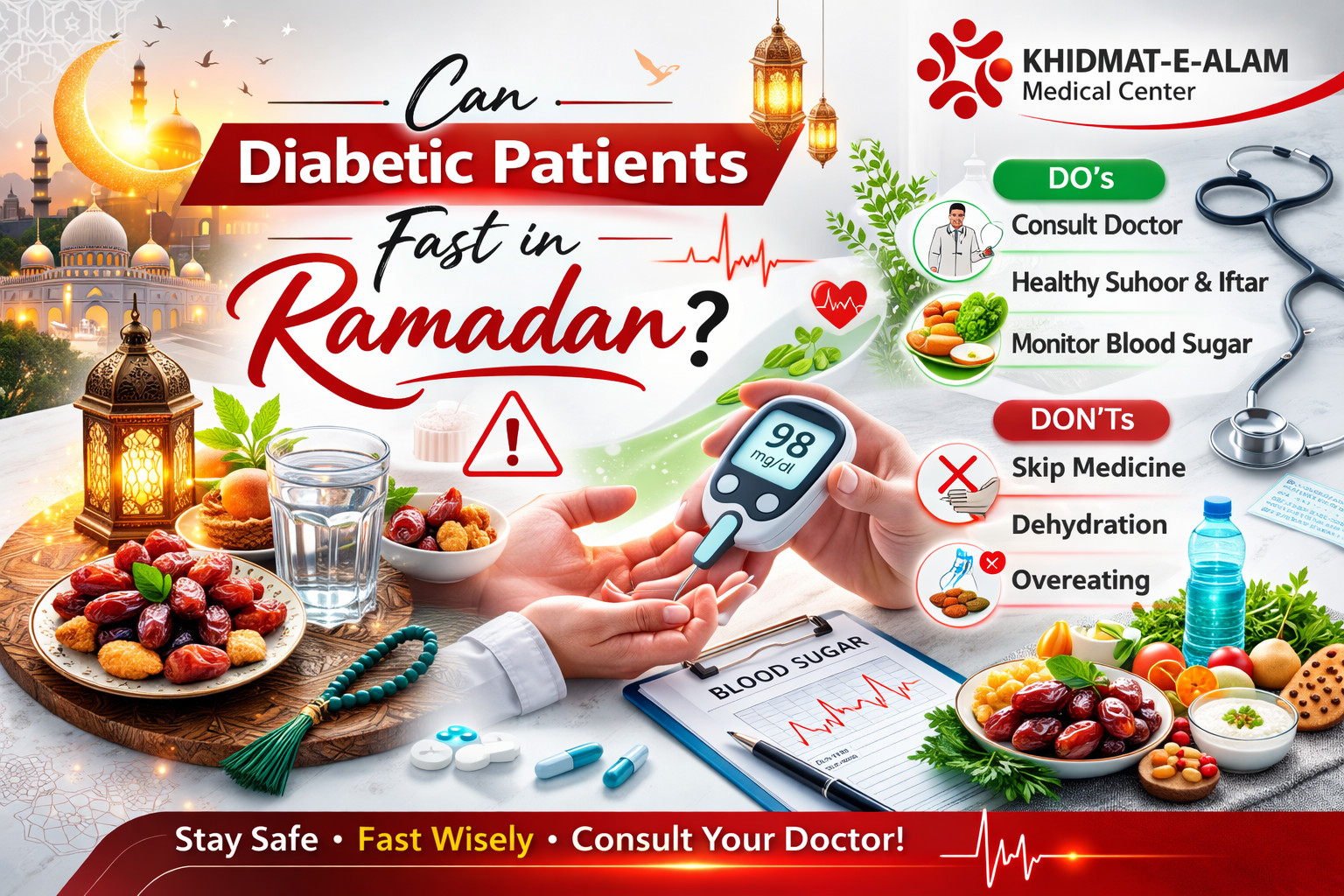
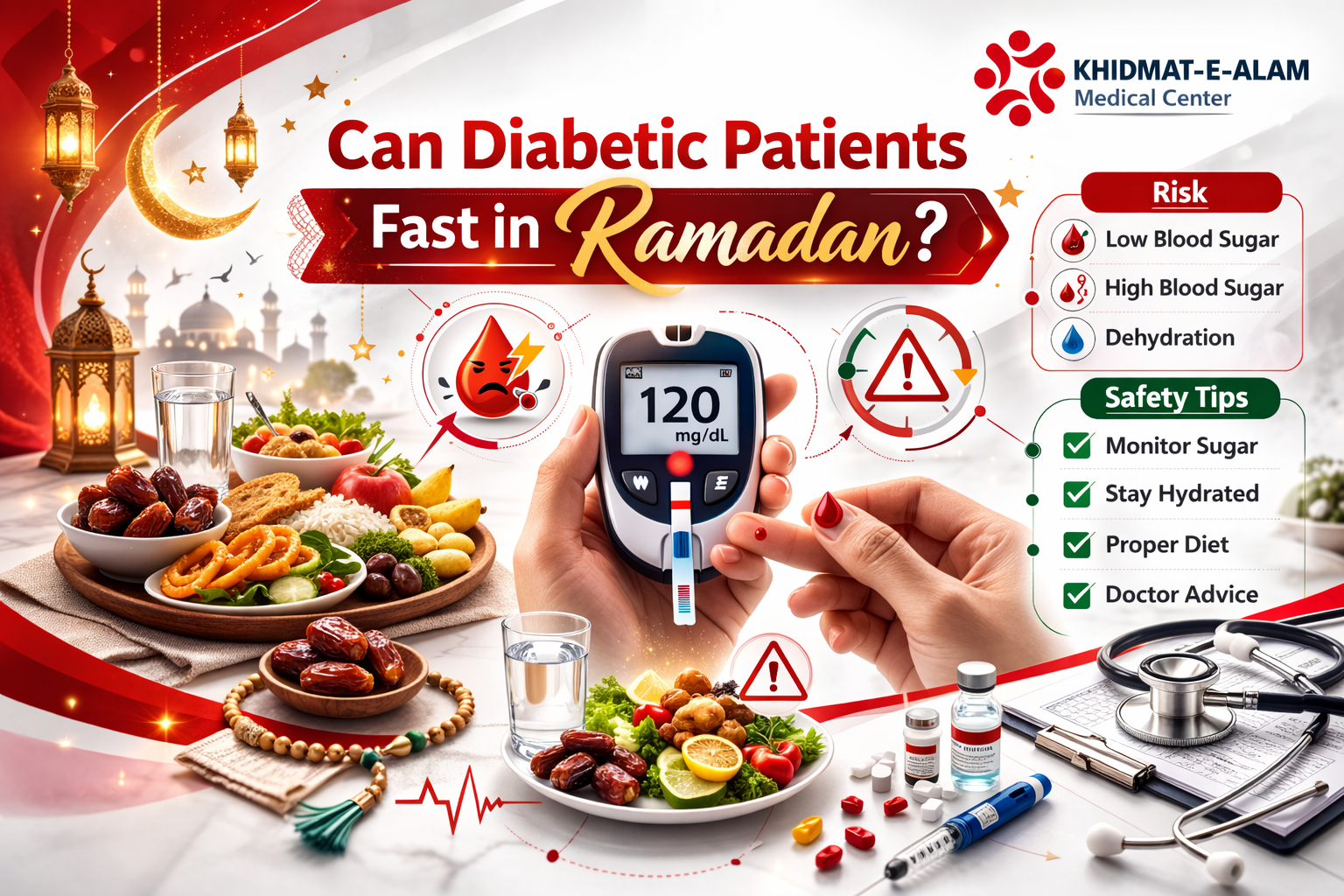
Can Diabetic Patients Fast in Ramadan?
Can diabetic patients fast in Ramadan safely? Learn medical risks, safety tips, and when to avoid fasting. Expert advice from doctors in Karachi. Ramadan is a sacred month of spiritual reflection and fasting. However, for people living with diabetes, the question becomes very important:
Can diabetic patients fast in Ramadan safely?
The answer is not the same for everyone. It depends on the type of diabetes, blood sugar control, medications, and overall health condition.
Let’s understand the medical facts.
Understanding Diabetes and Fasting
Diabetes is a condition where the body cannot properly regulate blood sugar (glucose).
There are two main types:
- Type 1 Diabetes – The body does not produce insulin.
- Type 2 Diabetes – The body does not use insulin effectively.
During Ramadan, fasting from dawn to sunset changes:
- Meal timings
- Medication schedules
- Sleep routine
- Hydration levels
These changes can significantly affect blood sugar levels.
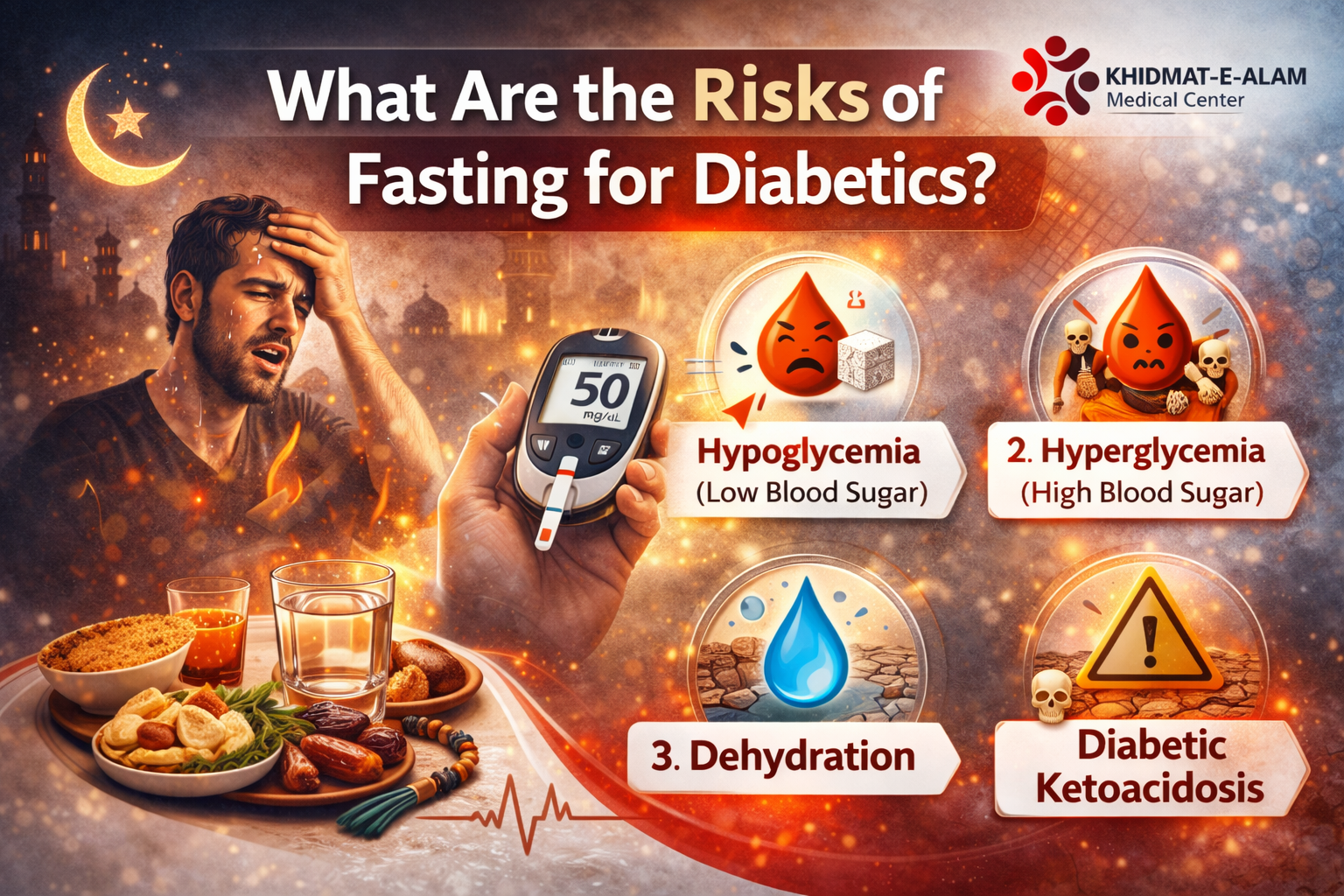
What Are the Risks of Fasting for Diabetics?
Fasting can lead to serious complications if not managed properly.
1️⃣ Hypoglycemia (Low Blood Sugar)
This happens when blood sugar drops too low.
Symptoms include:
- Dizziness
- Sweating
- Shaking
- Confusion
- Fainting
Severe hypoglycemia can be life-threatening.
2️⃣ Hyperglycemia (High Blood Sugar)
If patients overeat at Iftar or skip medications, blood sugar may rise dangerously high.
Symptoms include:
- Excessive thirst
- Frequent urination
- Fatigue
- Blurred vision
3️⃣ Dehydration
Long fasting hours, especially in hot weather, can cause dehydration, which is dangerous for diabetic patients.
4️⃣ Diabetic Ketoacidosis (Especially Type 1)
This is a serious emergency condition caused by very high blood sugar and lack of insulin.
Which Diabetic Patients Should NOT Fast?
According to medical guidelines, the following patients are considered high-risk:
❌ Type 1 diabetes with poor control
❌ Frequent hypoglycemia history
❌ Pregnant women with diabetes
❌ Patients with kidney disease
❌ Elderly patients with complications
❌ Recent hospitalization due to diabetes
These patients are usually advised not to fast and may consider religious exemptions.
Which Diabetic Patients May Be Able to Fast?
Some patients with:
✔ Well-controlled Type 2 diabetes
✔ Stable blood sugar levels
✔ Proper medication adjustment
✔ Doctor supervision
May fast safely with medical guidance.
But consulting a doctor before Ramadan is essential.
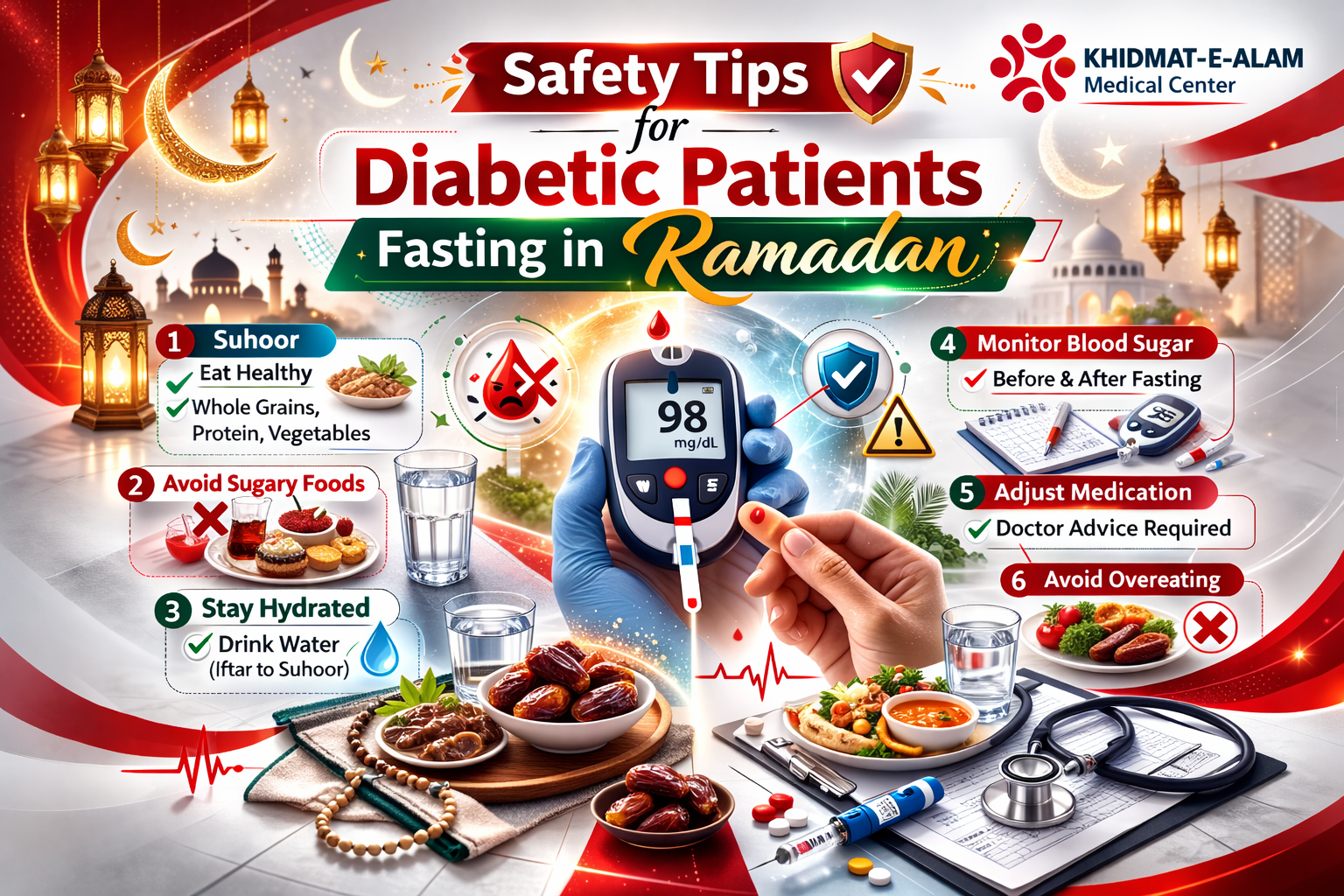
Safety Tips for Diabetic Patients Fasting in Ramadan
If your doctor allows fasting, follow these safety measures:
✔ Monitor Blood Sugar Regularly
Checking blood sugar does NOT break the fast.
Recommended times:
- Before Suhoor
- Midday
- Before Iftar
- 2 hours after Iftar
✔ Never Skip Suhoor
Eat:
- Complex carbohydrates (oats, whole wheat)
- Protein (eggs, yogurt, lentils)
- Fiber-rich foods
Avoid sugary and fried foods.
✔ Break Fast Immediately If:
- Blood sugar is below 70 mg/dL
- Blood sugar is above 300 mg/dL
- You feel dizzy or weak
Your health comes first.
✔ Adjust Medication
Insulin and oral medications may need dose adjustments.
Never change medication without consulting your doctor.
✔ Stay Hydrated
Drink sufficient water between Iftar and Suhoor.
Religious Perspective
Islam does not require fasting if it harms health. The Quran allows exemptions for the sick.
Protecting life and health is a priority in Islam.
Final Medical Advice
Can diabetic patients fast in Ramadan?
✔ Some can — with proper medical supervision.
❌ Some should not — due to high risk.
Every patient is different. A personalized medical assessment is necessary before deciding.
Consult Our Doctors in Ramadan
If you or your family member has diabetes and is planning to fast, visit:
Khidmat-e-Alam Medical Center
Providing 24/7 affordable and subsidized healthcare services.
📍 Address: 351 Usmania Society, B Road, Nazimabad No.1, Karachi, Pakistan
📞 UAN: +92-21-111-111-528
📞 Phone: +92-21-36602420
📱 Mobile: +92-334-0003333
🌐 Website: www.khidmat-e-alam.org
📧 Email: info@khidmat-e-alam.org
Stay safe. Fast wisely. Protect your health this Ramadan.