


Share On:


30 Daily Health Tips for 30 Days of Ramadan
Ramadan is a blessed month of spiritual reflection, discipline, and self-improvement. While fasting from dawn to sunset offers numerous spiritual benefits, maintaining your physical health during Ramadan is equally important.
To help you stay energetic, hydrated, and healthy throughout the month, we’ve prepared 30 daily health tips for 30 days of Ramadan. Follow these simple yet effective guidelines to make your fasting experience healthier and more rewarding.
🌙 Week 1: Building a Strong Foundation
Day 1: Start Suhoor with Complex Carbohydrates
Choose whole grains like oats, brown bread, or porridge. Complex carbs release energy slowly and keep you full longer.
Day 2: Include Protein at Suhoor
Add eggs, yogurt, milk, peanut butter, or lentils to prevent muscle loss and reduce hunger during the day.
Day 3: Hydrate Smartly
Drink 8–10 glasses of water between Iftar and Suhoor. Avoid drinking large amounts at once — spread it out.
Day 4: Break Fast Gently
Start Iftar with dates and water. Dates restore blood sugar levels naturally and provide instant energy.
Day 5: Avoid Fried Foods
Limit samosas, pakoras, and fried snacks. Excess oil can cause bloating, acidity, and weight gain.
Day 6: Control Portion Sizes
Overeating at Iftar can cause lethargy and digestive discomfort. Eat moderate portions.
Day 7: Eat Slowly
Chew your food properly. It improves digestion and prevents overeating.
🌙 Week 2: Boosting Energy & Digestion
Day 8: Add Fruits Daily
Include fruits like bananas, apples, watermelon, and papaya for natural vitamins and hydration.
Day 9: Include Fiber-Rich Foods
Vegetables, salads, and whole grains prevent constipation, a common issue during Ramadan.
Day 10: Limit Sugary Drinks
Avoid excessive Rooh Afza, sodas, and sweetened juices. They spike blood sugar and increase thirst.
Day 11: Avoid Excess Salt
Salty foods increase dehydration and make fasting harder the next day.
Day 12: Choose Healthy Cooking Methods
Prefer grilling, baking, steaming, or air frying over deep frying.
Day 13: Add Healthy Fats
Include nuts, seeds, olive oil, and avocados in small amounts for sustained energy.
Day 14: Light Physical Activity
Take a 15–20 minute walk after Iftar to improve digestion and maintain fitness.
🌙 Week 3: Maintaining Strength & Immunity
Day 15: Don’t Skip Suhoor
Skipping Suhoor can cause weakness, headaches, and fatigue during the day.
Day 16: Include Dairy Products
Milk, yogurt, and laban support gut health and provide calcium.
Day 17: Watch Caffeine Intake
Reduce tea and coffee. Caffeine increases dehydration and can cause headaches.
Day 18: Prioritize Sleep
Aim for 6–8 hours of sleep. Poor sleep can weaken immunity and increase fatigue.
Day 19: Avoid Heavy Desserts
Limit fried sweets and sugary desserts. Opt for fruit-based desserts instead.
Day 20: Add Iron-Rich Foods
Include spinach, dates, lentils, and lean meats to prevent weakness and anemia.
Day 21: Strengthen Immunity
Consume citrus fruits, honey, ginger, and black seeds for natural immunity support.
🌙 Week 4: Finishing Ramadan Strong
Day 22: Stay Consistent with Water Intake
Continue drinking water regularly throughout non-fasting hours.
Day 23: Practice Mindful Eating
Listen to your body’s hunger signals. Avoid emotional or stress eating.
Day 24: Manage Acid Reflux
Avoid spicy and greasy foods if you suffer from acidity.
Day 25: Maintain Balanced Meals
Each meal should include:
- Protein
- Complex carbohydrates
- Healthy fats
- Vegetables
Day 26: Avoid Late-Night Overeating
Eating heavy meals right before sleep can cause indigestion and weight gain.
Day 27: Gentle Stretching
Light stretching improves circulation and reduces muscle stiffness.
Day 28: Reduce Processed Foods
Limit packaged snacks and processed meats.
Day 29: Reflect on Healthy Habits
Identify which healthy habits you can continue after Ramadan.
Day 30: Plan for Eid Mindfully
Enjoy Eid celebrations but avoid overindulging in sweets and fried foods.
Additional Ramadan Health Tips
✔️ People with diabetes, hypertension, heart disease, or pregnancy should consult a doctor before fasting.
✔️ If you feel dizziness, extreme weakness, or dehydration, seek medical advice.
✔️ Maintain medication schedules under medical supervision.
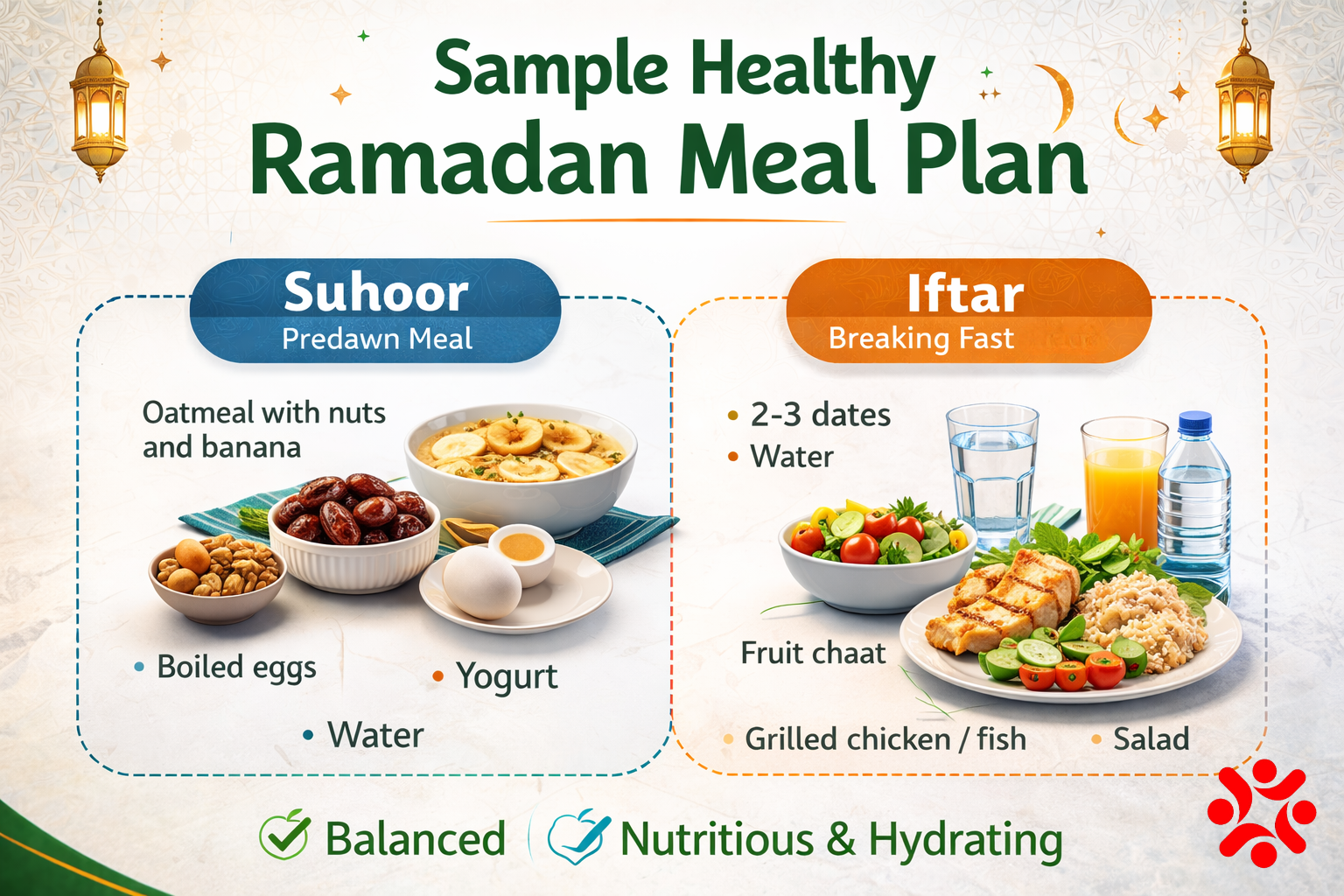
Sample Healthy Ramadan Meal Plan
Suhoor:
- Oatmeal with nuts and banana
- Boiled eggs
- Yogurt
- Water
Iftar:
- 2–3 dates
- Water
- Fruit chaat
- Grilled chicken/fish
- Salad
- Brown rice or chapati
Conclusion
Ramadan is not only a time for spiritual growth but also an opportunity to improve your physical health. By following these 30 daily health tips for Ramadan, you can maintain your energy levels, support your immune system, and avoid common fasting-related problems.
May this Ramadan bring you health, peace, and countless blessings.
If you have any medical concerns regarding fasting, consult our experienced doctors at Khidmat-e-Alam Medical Center for proper guidance.
 351 Usmania Society, B Road, Nazimabad No.1, Karachi
 UAN: +92-21-111-111-528
 www.khidmat-e-alam.org