

Share On:


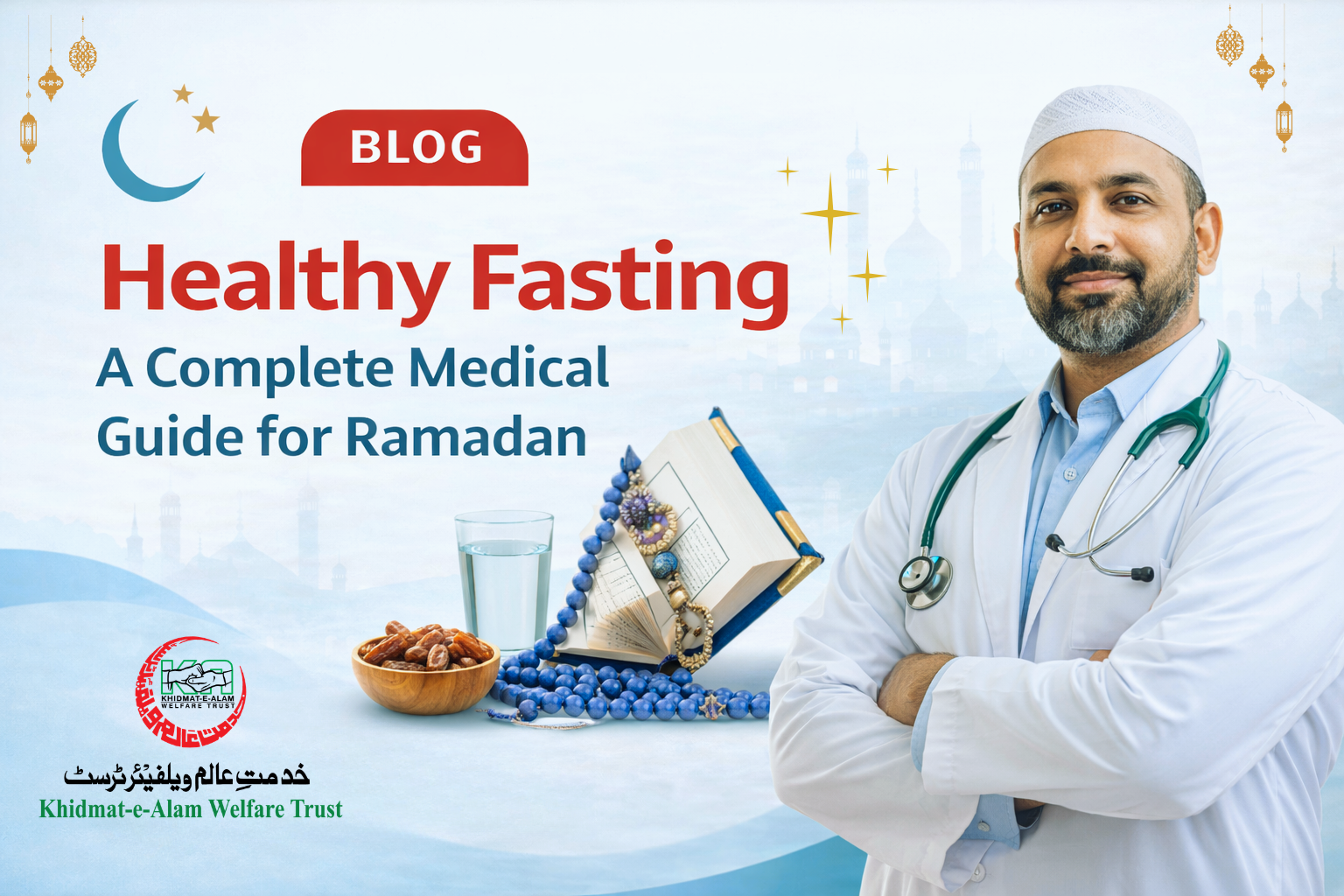
Healthy Fasting: A Complete Medical Guide for Ramadan
Ramadan is a blessed month of spiritual reflection, self-discipline, and devotion. Along with its spiritual rewards, fasting also brings significant physical changes to the body. When done correctly, fasting can improve metabolism, enhance self-control, and support overall health. However, unhealthy eating habits and poor lifestyle choices during Ramadan can lead to fatigue, dehydration, acidity, and other medical issues.
This complete medical guide will help you fast in a healthy and safe way during Ramadan.
What Happens to Your Body During Fasting?
When you fast from Sehri (Suhoor) to Iftar:
- First 6–8 hours: The body uses stored glucose for energy.
- After that: The body begins using stored fats for fuel.
- Insulin levels drop: Helping the body burn fat more efficiently.
- Digestive system rests: Allowing metabolic balance.
Healthy fasting can:
- Improve insulin sensitivity
- Support weight management
- Promote detoxification
- Enhance mental clarity
But these benefits only occur if you maintain a balanced diet and hydration.
How to Prepare for a Healthy Fast
1. Never Skip Sehri (Suhoor)
Sehri is essential to maintain energy levels throughout the day.
Best Sehri Foods:
- Whole grains (brown bread, oats, paratha in moderation)
- Eggs
- Yogurt
- Fruits (banana, apple)
- Nuts
- Plenty of water
Avoid:
- Fried foods
- Excessively salty items
- Sugary drinks
Skipping Sehri increases the risk of weakness, dehydration, and headaches.
2. Break Your Fast the Right Way
After long hours of fasting, your body needs gentle nourishment.
Healthy Iftar Plan:
- Start with dates (1–2 pieces) and water
- Fresh fruit or fruit chaat
- Light soup (lentil or vegetable)
- Grilled or baked protein (chicken, fish)
- Moderate portion of roti or rice
Avoid:
- Deep-fried foods (samosa, pakora in excess)
- Sugary drinks and sodas
- Overeating
Overeating at Iftar can cause:
- Acidity
- Indigestion
- Weight gain
- Blood sugar spikes
Hydration: The Key to Healthy Fasting
Dehydration is one of the most common health problems during Ramadan.
Tips to Stay Hydrated:
- Drink 8–10 glasses of water between Iftar and Sehri
- Avoid excessive tea and coffee (they increase dehydration)
- Include water-rich fruits like watermelon and cucumber
- Use ORS if needed (after consulting a doctor)
Signs of severe dehydration:
- Dizziness
- Extreme weakness
- Dry mouth
- Dark urine
If symptoms are severe, you should break your fast and seek medical advice.
Managing Common Health Issues During Ramadan
1. Acidity & Heartburn
- Avoid spicy and fried foods
- Eat smaller portions
- Do not lie down immediately after Iftar
2. Headaches
Often caused by caffeine withdrawal or dehydration.
- Gradually reduce caffeine before Ramadan
- Maintain water intake
3. Constipation
- Eat fiber-rich foods
- Include fruits and vegetables
- Stay hydrated
Fasting with Medical Conditions
Not everyone is medically fit to fast. Islam provides exemptions for those who are ill.
Diabetic Patients
- Must consult a doctor before fasting
- Monitor blood sugar regularly
- Adjust medications under medical supervision
Warning signs to break the fast:
- Blood sugar below 70 mg/dL
- Severe dizziness
- Confusion
- Excessive sweating
Heart & Blood Pressure Patients
- Continue prescribed medication
- Avoid salty and fried foods
- Monitor blood pressure regularly
Pregnant & Breastfeeding Women
- Should seek medical advice before fasting
Sleep & Physical Activity During Ramadan
Changes in sleep schedule can cause fatigue.
Healthy Sleep Tips:
- Take short naps
- Avoid staying awake all night
- Maintain 6–8 hours of total sleep
Exercise in Ramadan
- Best time: 1–2 hours after Iftar
- Light walking is ideal
- Avoid heavy workouts while fasting
When You Should Not Fast
You should avoid fasting if you have:
- Uncontrolled diabetes
- Severe heart disease
- Chronic kidney disease
- Acute illness
- Severe dehydration
Your health is an amanah (trust). Protecting it is important.
Final Medical Advice for a Healthy Ramadan
Healthy fasting is about balance — not starvation or overeating. Ramadan is not meant to harm your body but to strengthen both your spiritual and physical well-being.
Follow these key principles:
✔ Never skip Sehri
✔ Avoid overeating at Iftar
✔ Stay hydrated
✔ Monitor existing medical conditions
✔ Consult a doctor if unsure
If you have any medical concerns regarding fasting, consult our experienced doctors at Khidmat-e-Alam Medical Center for proper guidance.
📍 351 Usmania Society, B Road, Nazimabad No.1, Karachi
📞 UAN: +92-21-111-111-528
🌐 www.khidmat-e-alam.org
May this Ramadan bring you health, peace, and countless blessings. 🌙✨