Share On:


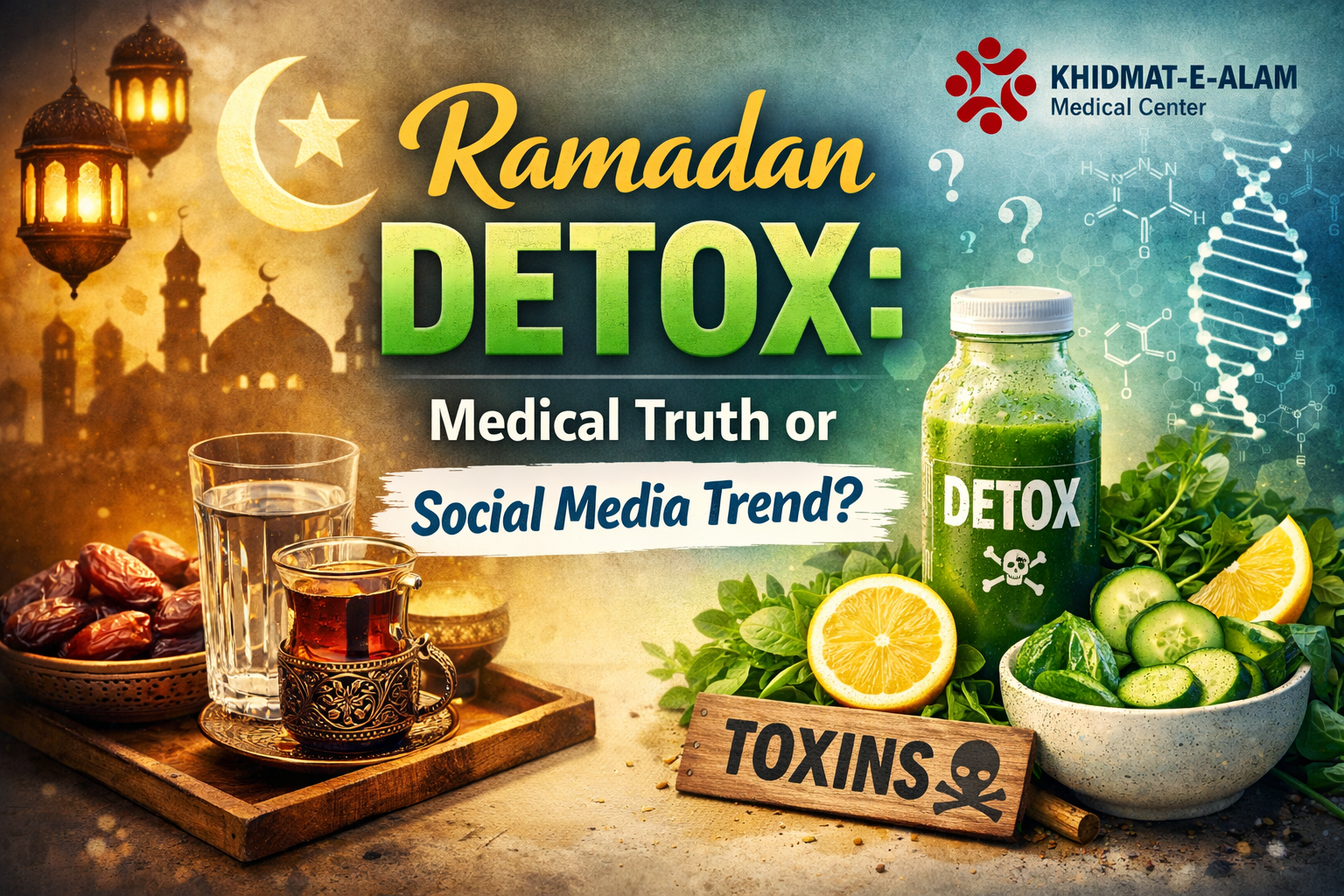
Ramadan Detox: Medical Truth or Social Media Trend?
Every year before Ramadan, social media becomes flooded with posts about “Ramadan Detox” claiming that fasting for 30 days cleanses your body, removes toxins, resets metabolism, and cures various health issues.
But is Ramadan really a medical detox?
Or is this just another trending buzzword?
Let’s explore the medical facts behind fasting in Ramadan and separate truth from social media hype.
What Is “Detox” According to Medical Science?
In medical terms, detoxification is the process by which the body removes harmful substances.
The truth is:
Your body already has a built-in detox system:
- Liver : filters and processes toxins
- Kidneys : remove waste through urine
- Lungs : eliminate carbon dioxide
- Digestive system : removes solid waste
There is no scientific evidence that special detox drinks, juices, or extreme diets are required for cleansing the body.
So where does Ramadan fasting fit in?
What Happens to Your Body During Ramadan Fasting?
During Ramadan, Muslims fast from dawn (Suhoor) to sunset (Iftar), avoiding food and drink. This creates a structured period of intermittent fasting.
Here’s what medically happens:
1. Improved Insulin Sensitivity
When you fast, insulin levels drop. This helps:
- Improve blood sugar control
- Reduce risk of type 2 diabetes
- Support fat burning
2. Fat Utilization
After several hours without food, the body starts using stored fat for energy. This may:
- Support weight loss (if eating is controlled)
- Reduce visceral fat
3. Cellular Repair (Autophagy)
Some studies suggest fasting may activate autophagy – a natural process where damaged cells are broken down and recycled. This supports overall cellular health.
However, this does NOT mean fasting “flushes toxins” like many viral posts claim.
Is Ramadan a True Detox?
✔ Scientifically Accurate:
- It gives the digestive system rest.
- It may improve metabolic health.
- It can reduce overeating habits.
- It may promote weight management (if done correctly).
❌ Social Media Myths:
- “Ramadan removes all toxins.”
- “Fasting cures all diseases.”
- “You don’t need medical treatment during Ramadan.”
- “Detox drinks are required during fasting.”
Your liver and kidneys already detox your body daily — even when you are not fasting.
Ramadan fasting supports metabolic balance, but it is not a magical cleansing cure.
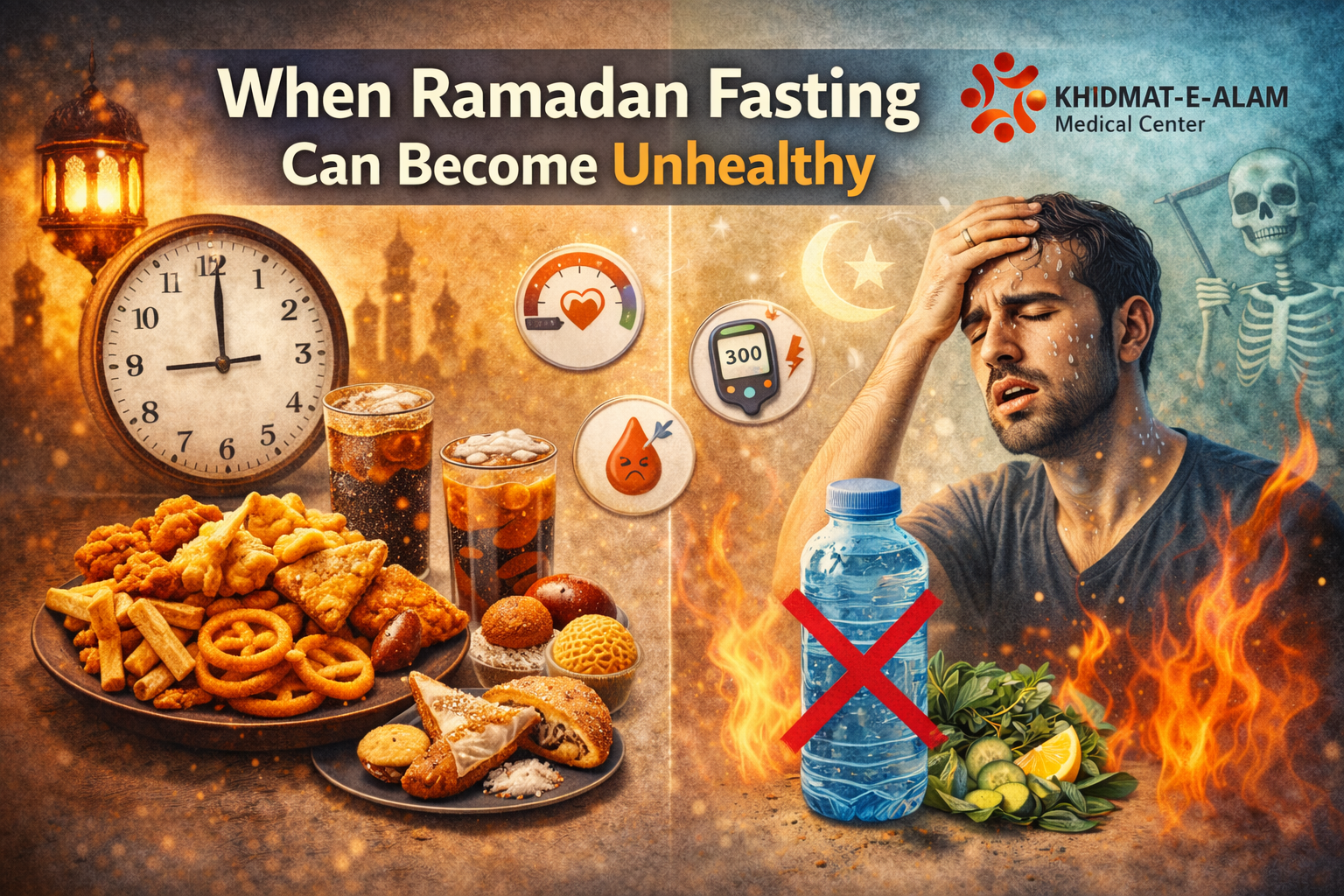
When Ramadan Fasting Can Become Unhealthy
Ironically, what many people call “Ramadan detox” can turn unhealthy due to:
- Overeating fried foods at Iftar
- Excessive sugary drinks
- Dehydration
- Skipping Suhoor
- Poor sleep schedule
If Iftar becomes a feast of oily foods and desserts, the health benefits of fasting are reduced.
Ramadan is not about starving all day and overeating at night – balance is key.
Healthy Ramadan Tips (Doctor-Recommended)
To make Ramadan beneficial for your health:
✔ At Suhoor:
- Eat complex carbohydrates (oats, whole wheat roti)
- Include protein (eggs, yogurt, lentils)
- Drink sufficient water
✔ At Iftar:
- Break fast with dates and water
- Avoid overeating fried foods
- Include fruits and vegetables
- Eat moderate portions
✔ Stay Hydrated:
Drink 8–10 glasses of water between Iftar and Suhoor.
✔ Special Medical Advice:
Patients with:
- Diabetes
- High blood pressure
- Kidney disease
- Gastric problems
- Pregnant women
Should consult a doctor before fasting.
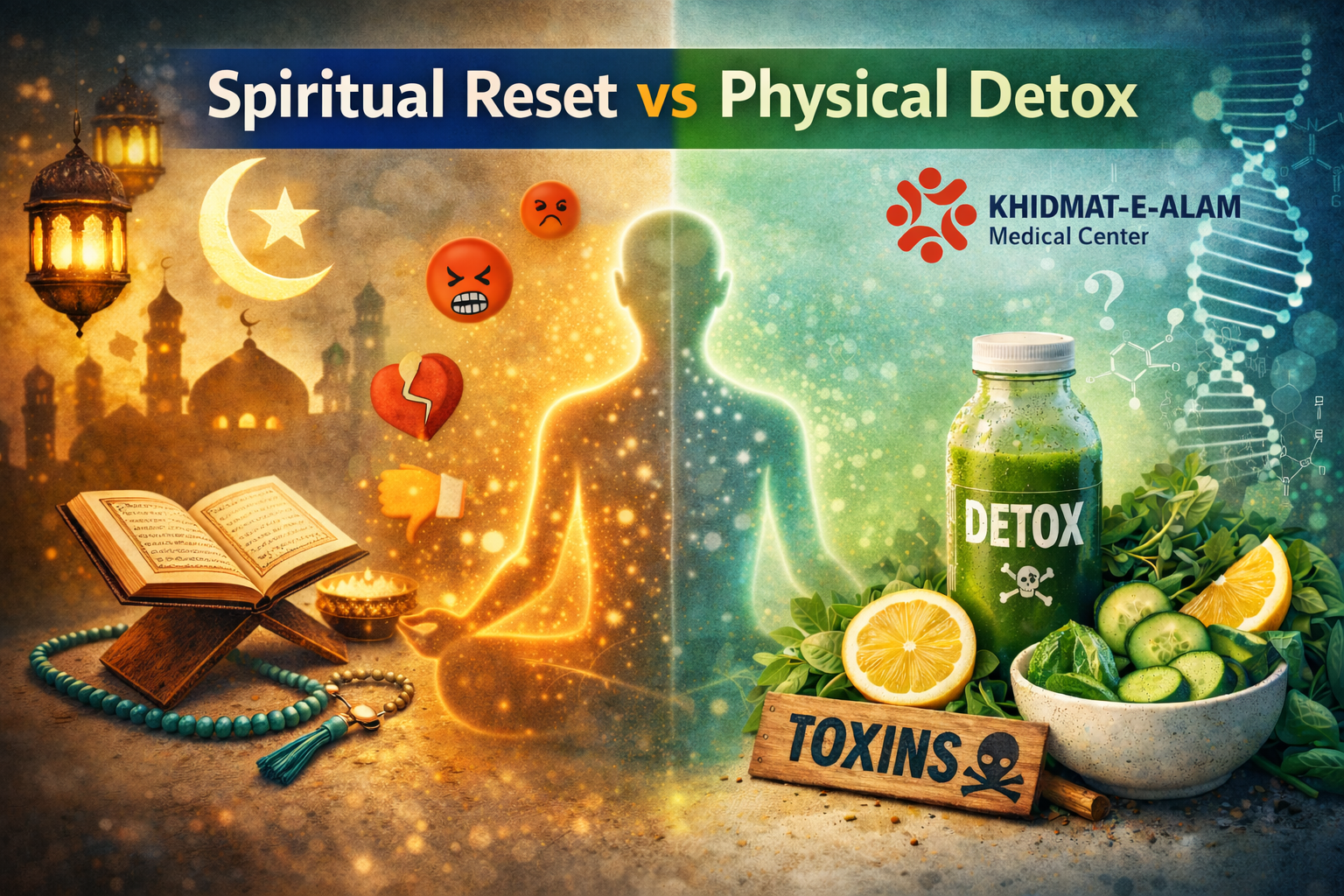
Spiritual Reset vs Physical Detox
Ramadan is primarily a spiritual detox:
- Detox from bad habits
- Detox from anger
- Detox from negativity
- Detox from unhealthy behaviors
Physical benefits are a bonus — not the primary purpose.
Final Verdict: Medical Truth or Trend?
Ramadan fasting does provide real health benefits when practiced correctly.
However, calling it a “full body detox” that eliminates toxins is more of a social media trend than medical reality.
The body is already equipped with powerful detox organs. Ramadan supports metabolic health, but it is not a miracle cure.
Need Medical Advice Before Ramadan?
If you have any chronic illness or health concern and are unsure about fasting, consult our qualified doctors at:
Khidmat-e-Alam Medical Center
Providing 24/7 affordable and subsidized healthcare services.
📍 Address: 351 Usmania Society, B Road, Nazimabad No.1, Karachi, Pakistan
📞 UAN: +92-21-111-111-528
📞 Phone: +92-21-36602420
📱 Mobile: +92-334-0003333
🌐 Website: www.khidmat-e-alam.org
📧 Email: info@khidmat-e-alam.org
Your health matters | this Ramadan, fast wisely and stay healthy.